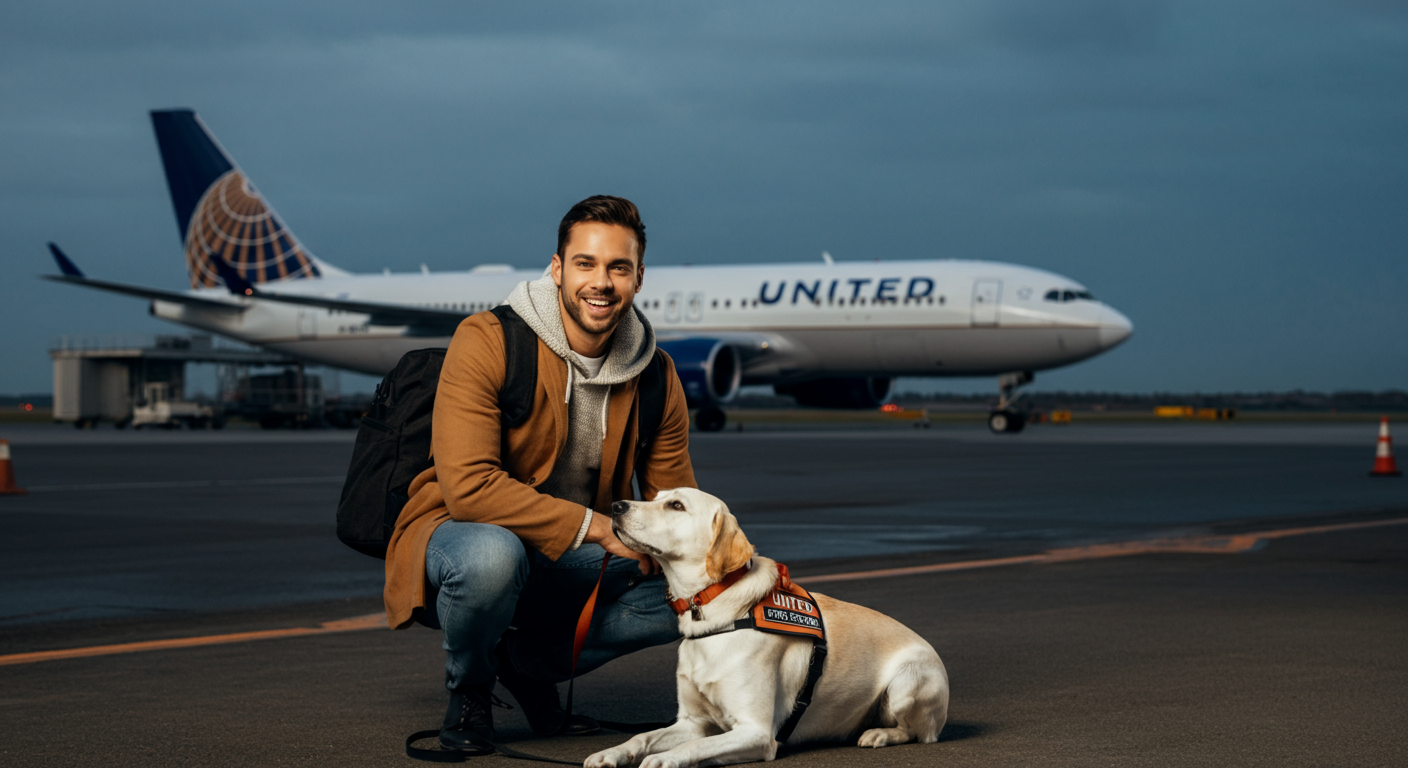
Traveling with your beloved pet or essential service animal can be a complex endeavor, especially when navigating the specific policies of each airline. United Airlines, a major carrier, has detailed guidelines to ensure the safety and comfort of all passengers, including those traveling with animals. This comprehensive guide will break down United Airlines' pet policy, focusing on service animals, emotional support animals (where applicable), and general pet travel.
Understanding United Airlines' Pet Policy
United Airlines categorizes animals into a few distinct groups, each with its own set of rules and requirements. It's crucial to understand these distinctions before planning your trip.
Service Animals
United Airlines recognizes service animals as dogs trained to perform tasks for individuals with disabilities. These animals are generally permitted to fly in the cabin free of charge, provided they meet specific criteria.
- Definition: A service animal is a dog, regardless of breed or type, that is individually trained to do work or perform tasks for the benefit of a qualified individual with a disability, including a physical, sensory, psychiatric, intellectual, or other mental disability.
- Documentation: While extensive documentation is no longer required for service animals, United Airlines may ask for a U.S. Department of Transportation (DOT) Service Animal Air Transportation Form. This form attests to the animal's health, training, and behavior.
- Behavior: Service animals must be well-behaved and under the control of their handler at all times. They should not pose a direct threat to the health or safety of others, or cause significant disruption in the cabin or airport.
- In-Cabin Travel: Service animals must fit at the handler's feet, under the seat, or in the handler's lap (if the animal is small and doesn't impede aisle access). They cannot occupy a seat.
Emotional Support Animals (ESAs)
Important Update: As of January 11, 2021, the U.S. Department of Transportation (DOT) no longer considers emotional support animals as service animals. This means airlines are not required to accommodate ESAs as service animals. United Airlines now treats ESAs as pets, and they must travel in accordance with their pet policy, which typically involves a fee and travel in a carrier.
If you plan to travel with an emotional support animal, it's essential to contact United Airlines directly to understand their current requirements and any associated fees or restrictions.
Pets Traveling in the Cabin
Small dogs and cats can travel in the cabin with you on most United flights, provided they meet certain conditions.
- Carrier Requirements: Your pet must travel in an approved pet carrier that fits completely under the seat in front of you. The carrier must be leak-proof and well-ventilated.
- Size and Weight: There are restrictions on the combined weight of the pet and carrier. Always check United's official website for the most up-to-date dimensions and weight limits.
- Fees: A one-way pet in cabin fee applies. This fee can vary, so confirm the current rate when booking.
- Reservations: Pet travel in the cabin is subject to availability, as there's a limit to the number of pets allowed per flight. It's highly recommended to make pet reservations as early as possible.
- Age and Health: Pets must be at least two months old for domestic travel and four months for international travel. They must also be in good health.
Pets Traveling in Cargo (PetSafe Program)
For larger pets or those not meeting in-cabin requirements, United's PetSafe program offers a climate-controlled and pressurized compartment in the cargo hold.
- Breed and Temperature Restrictions: Certain breeds (especially brachycephalic or "snub-nosed" breeds) may have restrictions due to respiratory issues. There are also temperature restrictions at departure, transfer, and arrival airports to ensure your pet's safety.
- Crate Requirements: Pets must travel in an IATA-compliant crate that is appropriately sized, sturdy, and clearly labeled.
- Health Certificates: A health certificate issued by a licensed veterinarian within a specific timeframe before travel is typically required.
- Booking: PetSafe travel must be booked through United's dedicated PetSafe desk and cannot be booked online.
Tips for a Smooth Journey with United Airlines
- Book Early: Space for pets in the cabin and cargo is limited. Book your flight and pet's travel as far in advance as possible.
- Check Destination Rules: If traveling internationally, research the import regulations, quarantine laws, and required vaccinations for your destination country well in advance.
- Prepare Your Pet: Acclimate your pet to its carrier or crate before the trip. Ensure they are comfortable spending time inside.
- Exercise Before Flight: Give your pet plenty of exercise before heading to the airport to help them relax during the journey.
- Food and Water: For in-cabin pets, offer water before boarding. For cargo pets, attach food and water dishes to the crate with instructions.
- Identification: Ensure your pet has proper identification, including a collar with tags and a microchip.
- Consult Your Vet: Always consult your veterinarian before traveling, especially for long flights or if your pet has any health concerns.
By thoroughly understanding and adhering to United Airlines' pet policy, you can ensure a safer and more comfortable travel experience for both you and your animal companion. Always refer to the official United Airlines website or contact their customer service for the most current and detailed information.
Need help implementing this?
Hire a top 1% Virtual Assistant today and get your time back.
Book a Free Strategy Call