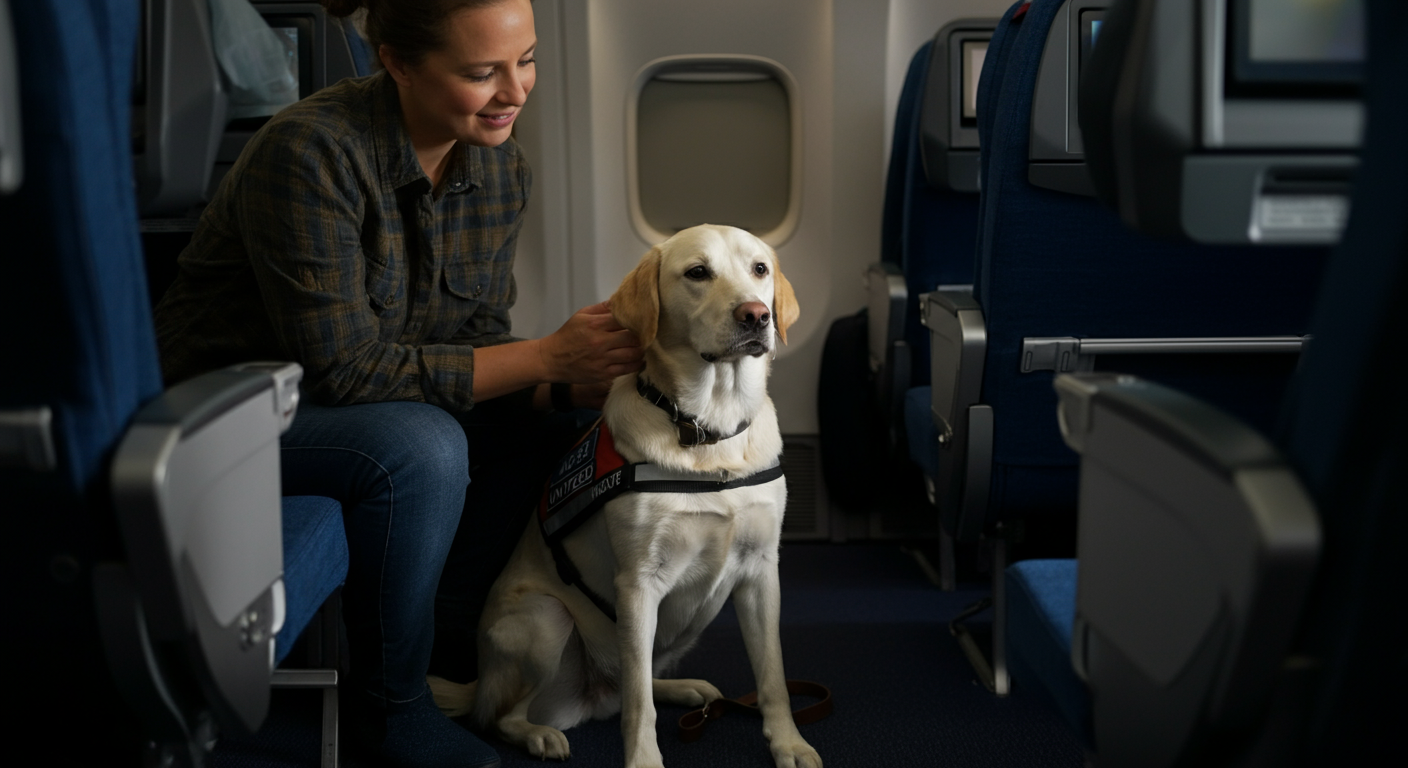
United Airlines Pet Policy: A Complete Guide for ESA and Service Animals
Traveling with your beloved animal companion can be a source of joy, but navigating airline pet policies can often feel like a labyrinth. If you're planning to fly with United Airlines and bring an emotional support animal (ESA) or a service animal, understanding their specific guidelines is crucial for a smooth and stress-free journey. At ASSISTXVA, we're here to simplify the process and provide you with a comprehensive guide to United Airlines' pet policy for 2026.
Understanding the Basics: Pets, ESAs, and Service Animals
Before diving into the specifics, it's important to differentiate between general pets, Emotional Support Animals (ESAs), and Service Animals (SAs), as United Airlines' policies vary significantly for each:
- Pets: Typically small dogs and cats that can travel in a carrier under the seat in front of you, or larger animals that travel as cargo. Fees and restrictions apply.
- Emotional Support Animals (ESAs): Animals that provide comfort and support to individuals with mental or emotional disabilities. Following recent regulatory changes, ESAs are generally no longer recognized as service animals and travel as pets, subject to pet fees and carrier requirements.
- Service Animals (SAs): Dogs (and in some cases, miniature horses) individually trained to do work or perform tasks for the benefit of an individual with a disability. These animals are granted specific accommodations under the Air Carrier Access Act (ACAA).
United Airlines Policy for Service Animals
United Airlines is committed to accommodating passengers with disabilities who travel with service animals. Here's what you need to know:
- Definition: A service animal is a dog, regardless of breed or type, that is individually trained to do work or perform tasks for the benefit of a qualified individual with a disability, including a physical, sensory, psychiatric, intellectual, or other mental disability.
- Documentation: For flights booked on or after January 11, 2021, United Airlines requires passengers traveling with a service animal to complete and submit the U.S. Department of Transportation (DOT) Service Animal Air Transportation Form. This form attests to the animal's training, behavior, and health.
- Behavior: Service animals must be well-behaved and under the control of their handler at all times. They must not pose a direct threat to the health or safety of others, or cause a significant disruption in the cabin.
- In-Cabin Travel: Service animals are permitted to travel in the cabin at no charge, provided they can fit at the handler's feet, under the seat, or in the handler's lap (if the animal is no larger than a two-year-old child). They must not obstruct the aisle or other emergency exit areas.
- Relief Areas: United will make reasonable efforts to provide relief areas for service animals at airports.
United Airlines Policy for Emotional Support Animals (ESAs)
As of January 11, 2021, United Airlines, in alignment with DOT regulations, no longer recognizes emotional support animals as service animals. This means:
- ESAs are now treated as pets and must adhere to United's standard pet policy.
- They will be subject to pet fees and must travel in an approved pet carrier that fits under the seat in front of you.
- If your ESA is too large to fit under the seat, it may need to travel as cargo, subject to availability and specific cargo requirements.
Traveling with Pets (Non-Service Animals) on United Airlines
If your animal is not a service animal, it will travel as a pet under United's PetSafe program or as an in-cabin pet.
In-Cabin Pets:
- Eligibility: Small dogs and cats that can fit comfortably in a carrier under the seat in front of you.
- Carrier Requirements: The carrier must be leak-proof and well-ventilated, with maximum dimensions that allow it to fit under the seat.
- Fees: A one-way fee applies for in-cabin pets.
- Restrictions: There are limits to the number of pets allowed in the cabin per flight, so it's essential to book early.
PetSafe (Cargo Travel):
- Eligibility: For animals too large to fit in the cabin or for certain breeds.
- Booking: Reservations must be made through United's PetSafe program.
- Requirements: Strict requirements apply for kennels, health certificates, and temperature restrictions.
- Fees: Cargo fees are significantly higher than in-cabin fees.
Essential Travel Tips for All Animal Companions
- Book Early: Space for in-cabin pets and cargo animals is limited.
- Veterinary Check-up: Ensure your animal is healthy and up-to-date on vaccinations. Obtain a health certificate from your vet within 10 days of travel.
- Proper Identification: Your animal should wear a collar with ID tags, and microchipping is highly recommended.
- Prepare Your Animal: Acclimate your pet to its carrier or harness well in advance. Consider a calming walk before the airport.
- Pack Essentials: Bring food, water, medications, and any comfort items for your animal.
- Arrive Early: Allow ample time for check-in and security procedures.
Conclusion
Traveling with your animal on United Airlines requires careful planning and adherence to their specific policies. By understanding the distinctions between pets, ESAs, and service animals, and preparing all necessary documentation, you can ensure a comfortable and compliant journey for both you and your companion. For further assistance with travel documents and certifications, remember that ASSISTXVA is here to help you every step of the way.
Need help implementing this?
Hire a top 1% Virtual Assistant today and get your time back.
Book a Free Strategy Call