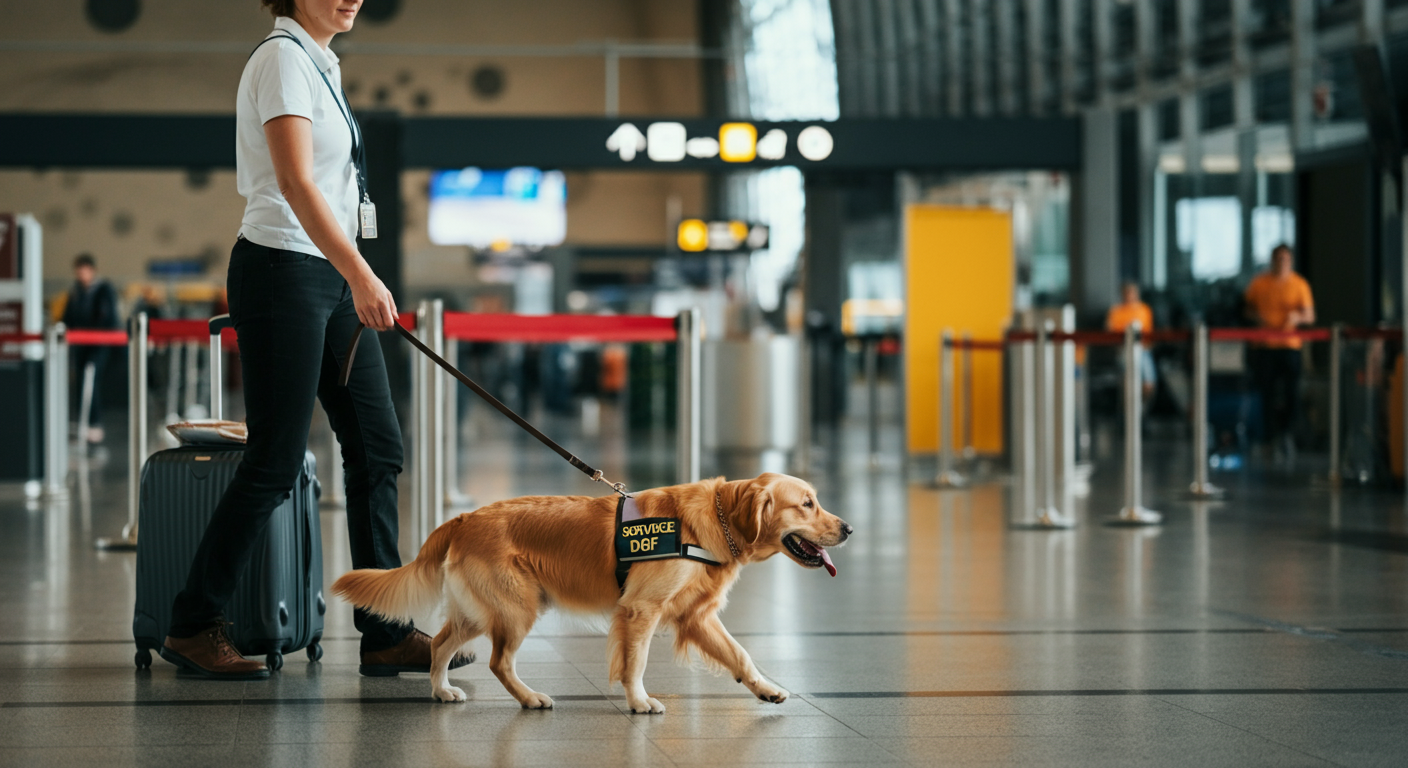
The Ultimate Guide to Traveling with Your Service Animal: Rights, Regulations, and Tips
Traveling with a service animal can be a rewarding experience, offering companionship and essential support. However, navigating the complexities of airline regulations, public access laws, and travel logistics requires careful planning and understanding. At ASSISTXVA, we believe in empowering individuals with the knowledge to travel confidently with their assistance animals. This comprehensive guide will walk you through everything you need to know, from understanding your rights to packing essentials and airport navigation.
Understanding Service Animals and Your Rights
First, it's crucial to distinguish between service animals and emotional support animals (ESAs), as their legal protections and travel regulations differ significantly, especially concerning air travel.
What is a Service Animal?
Under the Americans with Disabilities Act (ADA), a service animal is defined as a dog (or in some cases, a miniature horse) that has been individually trained to do work or perform tasks for an individual with a disability. The work or tasks performed by a service animal must be directly related to the individual's disability. Examples include guiding people who are blind, alerting people who are deaf, pulling a wheelchair, alerting and protecting a person who is having a seizure, reminding a person with mental illness to take prescribed medications, or calming a person with Post Traumatic Stress Disorder (PTSD) during an anxiety attack.
The ADA mandates that service animals are allowed to accompany people with disabilities in all areas where the public is normally allowed to go. This includes public transportation, businesses, and government facilities.
Emotional Support Animals (ESAs)
Emotional Support Animals (ESAs) provide comfort and companionship to individuals with mental or emotional disabilities but are not trained to perform specific tasks. While ESAs were previously afforded certain protections under the Air Carrier Access Act (ACAA), recent changes in regulations mean that airlines are no longer required to recognize ESAs as service animals. They are now generally treated as pets, subject to airline pet policies and associated fees.
Key Regulations for Air Travel with Service Animals
The primary regulation governing air travel with service animals is the Air Carrier Access Act (ACAA). The U.S. Department of Transportation (DOT) finalized new rules in 2020, which became effective in 2021, significantly impacting how airlines accommodate service animals.
The DOT's New Rules: What You Need to Know
- Definition of Service Animal: The DOT now defines a service animal as a dog, regardless of breed or type, that is individually trained to do work or perform tasks for the benefit of a qualified individual with a disability, including a physical, sensory, psychiatric, intellectual, or other mental disability.
- Emotional Support Animals: As mentioned, ESAs are no longer considered service animals under the ACAA.
- Documentation: Airlines can require passengers traveling with a service animal to complete and submit a DOT Service Animal Air Transportation Form prior to travel. This form attests to the animal's health, training, and behavior.
- Number of Animals: Airlines can limit the number of service animals per passenger to two.
- Size and Behavior: Service animals must fit at the passenger's feet, under the seat, or in the passenger's lap (if small enough) without encroaching on another passenger's space. Animals exhibiting aggressive behavior or that are not housebroken can be denied boarding.
- Breed Restrictions: Airlines are generally prohibited from imposing breed restrictions on service animals.
Airline-Specific Policies and Preparation
While the DOT sets federal guidelines, individual airlines may have specific procedures and forms. It is paramount to check with your airline well in advance of your travel date.
Before You Book:
- Contact Your Airline: As soon as you plan your trip, contact the airline's special assistance or disability services department. Inform them you will be traveling with a service animal.
- Complete Required Forms: Most airlines will require the DOT Service Animal Air Transportation Form. Some may have additional forms. Complete these accurately and submit them within the airline's specified timeframe (often 48 hours before departure).
- Understand Seating: Inquire about seating arrangements. Airlines must provide a reasonable accommodation for your service animal to fit safely.
During Booking and Check-in:
- Book Direct: Booking directly with the airline can simplify communication regarding your service animal.
- Arrive Early: Allow extra time at the airport for check-in and security procedures.
- Have Documentation Ready: Keep copies of all completed forms and your animal's vaccination records easily accessible.
Training and Behavior Expectations
A well-behaved service animal is crucial for smooth travel. Your animal must be under your control at all times and exhibit appropriate public behavior.
- Housebroken: Service animals must be housebroken. If your flight is long, plan for relief opportunities at airports.
- Under Control: Your animal should respond to your commands and not pose a threat or disruption to others.
- Leash/Harness: Your service animal must be leashed or harnessed at all times in public areas of the airport and on the aircraft.
Packing Essentials for Your Service Animal
Just like you pack for yourself, prepare a dedicated bag for your service animal.
- Food and Water: Pack enough for the journey and a little extra in case of delays. Collapsible bowls are very useful.
- Medications: If your animal is on medication, ensure you have an adequate supply.
- Waste Bags: Always have plenty on hand.
- Comfort Items: A favorite toy or blanket can help reduce stress.
- Identification: Ensure your animal wears its service animal vest or harness and has proper ID tags.
- Copies of Documents: Keep all health and travel documents in a waterproof pouch.
Navigating the Airport and Flight
Airports can be overwhelming, but with preparation, you and your service animal can navigate them with ease.
- Security Checkpoints: Inform TSA officers you are traveling with a service animal. You may be asked to walk through a metal detector with your animal, or your animal may need to go through a separate screening.
- Relief Areas: Most major airports have designated pet relief areas, often both pre- and post-security. Locate these on the airport's website or app before you arrive.
- Boarding: You may be allowed to pre-board to settle in comfortably.
- During the Flight: Ensure your animal remains at your feet or in your lap without obstructing aisles or other passengers.
International Travel Considerations
Traveling internationally with a service animal involves additional layers of complexity. Each country has its own specific import requirements, quarantine laws, and health certifications.
- Research Destination Country Rules: This is critical. Some countries have strict quarantine periods or require specific vaccinations and microchips.
- Veterinary Health Certificates: You will likely need a health certificate issued by a licensed veterinarian within a specific timeframe before travel, often endorsed by a government agency.
- Pet Passports: Some regions, like the EU, have pet passport schemes.
- Customs and Immigration: Be prepared for additional checks upon arrival at your international destination.
Common Challenges and Solutions
- Flight Delays/Cancellations: Have a contingency plan. Keep extra food, water, and medication. Know where airport relief areas are.
- Public Misunderstanding: Be prepared to politely educate others about your service animal's role and your rights.
- Animal Stress: Maintain your routine as much as possible. Provide comfort and reassurance to your animal.
Conclusion
Traveling with your service animal is a right that enables independence and accessibility. By understanding the regulations, preparing thoroughly, and communicating effectively with airlines and airport staff, you can ensure a smooth and stress-free journey for both you and your invaluable companion. At ASSISTXVA, we are committed to supporting your travel needs and empowering you with the information to explore the world with confidence.
Need help implementing this?
Hire a top 1% Virtual Assistant today and get your time back.
Book a Free Strategy Call